::Becoming Real::

I was a child of the sixties, and grew up in a household centered around the Holy Catholic Church and Pabst Blue Ribbon beer. My parents were children of the Great Depression; they learned that life means do without, stretch a dollar, work hard, and drink harder. I was their first child, born to them when they were still young, tragically beautiful, and very much in love. When I was a little girl I would shyly study my mother’s face … her wide eyes, long eyelashes, full red lips. She was clearly a movie star in hiding. I wondered what she was doing in this little life, in this house on North Marion Street, with its linoleum kitchen floor and one parched sapling in the front yard. Even at five, I knew she’d been miscast. Through the years, five more babies, and alcoholic chaos, it became an undeniable fact: my mother belonged in a different movie. 

As the oldest daughter, I took on the job of laugh inducing peacemaker. Lots of oldest daughters have that role. My brother, two years younger, was mother’s tenderhearted caretaker. We spent our childhood together in the family foxhole. Nothing will bond siblings like friendly fire. It’s a sort of hellish, heartbreaking love that no one else knows. No one. But at the time, it was our family’s brand of ‘normal,’ so imagine my surprise when, years later, I learned that some families have no foxhole at all.

I lurched through the decades, reinventing myself over and over, determined to be whoever those claiming to love me told me I was. It took over forty years, and one spectacular betrayal for me to stop, and turn my attention to the whisper of truth. It was there all along, but I hadn’t heard it before, because I wasn’t ready. Not only had I become ready, I threw up the white flag of surrender. I’d run out of things to try, people to be. And I was exhausted.. All I had left was me. When I finally gave into myself, it felt like declaring bankruptcy. 

I remember the date. May 12, 1991. My attorney’s call that morning woke me up. She was calling to let me know the divorce was final. She’d used the word, “Congratulations.” I got off the phone, and laid in bed, waiting. I didn’t know what to expect, but I thought surely I would feel … something. Relief? Excitement, maybe? All I got was silence. I threw off the covers, walked into the bathroom, and stared in the mirror. I looked into my own eyes, searching for … someone. Who will I be now? I whispered. I had no idea.

Ever since I was a tiny girl, there’s been … something … like a tiny thread … woven deep inside me. Piled over with years of Catholic school, alcoholic parents, sweet babies, abusive marriage, broken dreams … you’d think that thread would have broken, or suffocated, or disintegrated. It never did. 

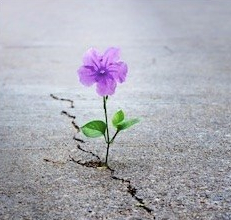
Like a flower finding its way to the sun through a crack in the stone, that shimmering little strand found its way back to me. 

The very thing I feared would be most difficult has become easy, feels natural. Coming home to myself is simple, and honest. I am moving back toward the center of someone I’ve always known. It warms my heart, settles my belly, and brings perspective into sharp focus. I know where home is now. And I see that I was right here all the time. 

::Big Brown Boots::

At Marquette School every day, Monday through Friday, started with Holy Mass.

Each class sat together with their Benedictine nun sitting proudly in charge of the group.

Once I received Holy Communion, I was able to partake every morning. This was back during the days when it was the rule to abstain from food after midnight in order to receive the Sacrament.

So I received it every morning. Recipients would file into the lunchroom to break their fast after Mass. My mother tied a dime and a nickel into the corner of a handkerchief. This bought me a cup of hot chocolate and one glazed donut. At that young age, this seemed the prize, and I confess to you now that – more often than not – it was that cocoa and that donut in my head when the priest placed the Host on my tongue.

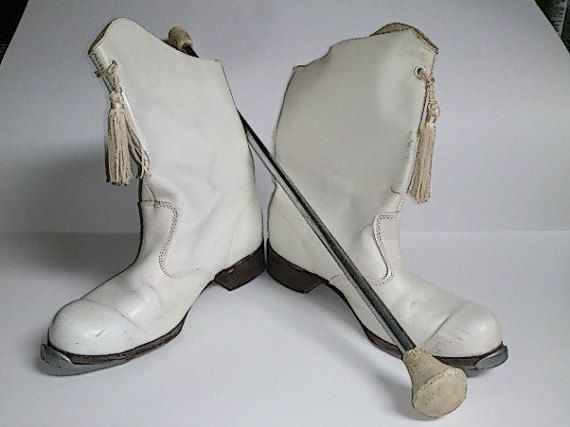
At one point I needed rubber boots. I dreamt of getting a pair of white boots with a big tassel on the front. I’d seen the drum majorettes wear them and that was exactly what I wanted!

The next memory that comes to mind is me, late to Mass, shlepping down the aisle in big, brown rubber boots. Christ the King church was filled with every student in the school, and was dead silent except for me, age six, clod hopping my way down that center aisle to the front pews, where the first graders sat. I wished the marble floor would swallow me up.

When purchasing them my mother had pointed out, quite briskly, that my brother could wear them once I’d outgrown them which – give the size – would surely have taken several years.

I hated my mother, I hated my brother, I hated those big brown boots, and I hated myself for all that hatred. I knew, in my freshly ordained young heart, that hatred was a sin. So I hated, more than anything, the hatred that I had.

It seems like I wore those big brown boots for years. At first every time I pulled them on, I willed them to be white boots with a big tassel on the front.

They never were anything but brown rubber.

Such a big lesson in humility for a six year old.

::Ask Me How I Know::

Have you ever been lied about? And have you tried to “out truth” the lies told about you?

I have. It’s a grueling and ultimately a hopeless exercise.

The effort can leave you breathless … the kind where, with every rapid gasp of air, your aching lungs cry out for mercy.

Lies told about you can be so dark, so extreme they can make your hair and eyelashes fall out. They can cause you to get therapy five days a week for months on end, keep your therapist on speed dial. Move you to write all night, and into the morning, just trying to claw your way out of the black hole you’ve been thrown into. It’s the PTSD of the violently besmirched. And it’s real.

Ask me how I know.

You’ll learn, sometimes the hard way, that silence is the best defense. In this case, the UK’s Royal Family has the best attitude: “never complain, never explain.”

Yup, it’s difficult, walking that path. Counterintuitive. But it’s where you’ll ultimately land when the gossiping “whale of Jonah” finally upchucks you onto the shore. There you’ll lay, waterlogged and exhausted. And, really, relieved to finally give it up.

Ask me how I know.

Do not think less of yourself for how someone’s lies about you have hurt you. It’s hard, it’s confusing, and it’s heartbreaking … especially because there’s never any good reason for it, no purpose other than to hurt and/or destroy you.

But here’s the thing: peace will abide. There’s a saying, “What other people think of you is none of your business.” Butbutbut … what do we do when “What other people say” about us is … so very, very wrong?

The answer, as hard as it is to grab onto, is: be more you. Lean in to who you are. Your authenticity is who God put here in you; it is your key to everything that is good, and true.

It’s tricky at first, and it takes some practice. But keep at it long enough, dedicate yourself to it deeply enough, and you will be present as “fully, wholly you.”

Once the ‘real’ version of you is strong, the chatter of untruths will no longer matter. Lord, yes, it takes time. But start. Start now, if you can. Because ninety days from now you’ll be ninety days older, whether you’ve been more you or not.

Give it a chance to move you toward the good stuff. Because it will, I promise.

Then you’ll discover that this is the good stuff that is born of the bad. And it is so good that, in a funny way, you’ll give thanks for all of it.

Ask me how I know.

::Where Jesus Flang It::

Leave it Lay Where Jesus Flang It

Yes. Do that.

Do not look back.

Don’t masticate the past.

It is the trail you’ve left, the one you’ve taken

Over insurmountable odds.

That path is made up of happiness, 

Confusion, glitter, strife, untapped potential,

Broken hearts, broken dreams, unwavering faith, 

Resolute determination.

Never forget how resolute you’ve been, even in your

Darkest, most hopeless hour.

Where did you get it? That determination?

Your faith stood firm, it brought you here.

And here you stand. 

Not “Here you sit,” or

“Here you crawl.”

You stand. 

There were times when you thought you’d never

Get here from there.

But you did.

Here you are.

Well done, you.

Carry on.

Best foot forward.

As for the past?

Leave it lay where Jesus flang it

::The Party::

I was not allowed to go. Anywhere.

Well, that’s a broad statement, too broad. I could attend school, Confession on Saturdays, Mass on Sundays. The time in between these events, when I wasn’t doing chores, I spent in my room … a small converted sunporch at the back of the house.

My bed was a chair that unfolded into a flat metal frame with three hard cushions. It was not a comfortable sleep, but at least it didn’t take up much room.

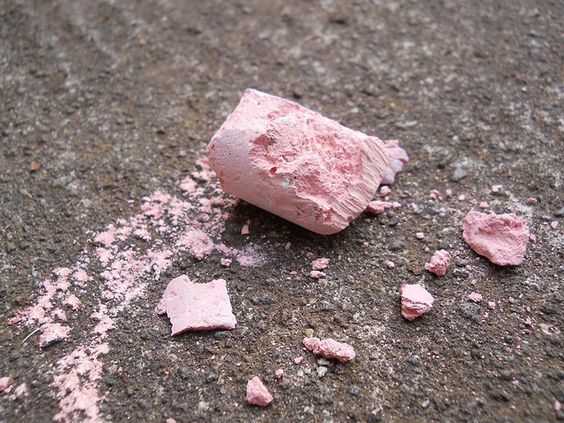
I was a budding artist, the one thing I did that mother seemed to approve of. My art supplies included a small box of pastels, and I treasured those short stubby chalks. I got lost in the process of creating with them, while Bobby Vee played on my little record player.

One night, in the middle of summer, after being told I could not attend a party my friends were throwing, I went to my room. I was sixteen, and not allowed to wear makeup.I looked at my chalks, and something “other” happened. I took the pastel rose colored stick, and with tweezers, shaved a bit to create a pile of dust. I took the sable brown color, and did the same. Then, a water color brush. I touched the shaved blushy color and brushed it over my cheeks, spreading and blending with my fingertips. The brown color I swiped gently into the socket crease of my eyelid. I softened it with my fingers.

Then, I put some of the pink dust into a spot of Vaseline and touched it to my lips.I brushed my hair, and looked in the mirror. The difference was remarkable. Who was I? Who is she? I leaned my forehead against the reflection and thought, “I am ready for a party that may never come.”

That was almost sixty years ago. I was so young and so naive then, so full of dreams and wonder. The road from there to here has been extremely rough at times, but passable.The bed I sleep in now, and the beds my grandchildren sleep in when they visit, are beautiful and stationary. They are piled with down pillows and spread with the kind of cozy bedding that would make Goldilocks swoon; they are clouds of heaven. To tell you the truth, there are times when I check the clock to see if it’s too early to end the day, climb the stairs, and climb into my bed.

I can go anywhere I want, any time I want. There is no one to tell me I can’t. I am, at long last, the boss of me.

Do I still get ready for parties? Sometimes. When I want to. Not when I don’t.

And really, I’m beginning to think that the party I thought I was ready for so many years ago was, in fact, this life I’m living now.

::About Jean::

I’ve been ruminating the past few days, over friends and family members. Some who are still here on earth, and others – too many for my liking – who have passed on.

Today this is about Jean.

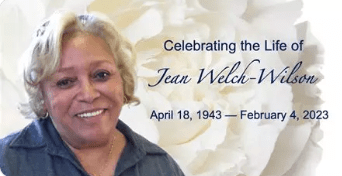
Jean’s funeral was last week. I drove in to Fisk Chapel from Franklin, where I was shepherding my grandkids while their parents were away.

I parked and went into the beautiful little chapel at Fisk University. I hugged a dear friend in the vestibule, and signed the guest book.

I found my seat, and held the silence for a moment. Then I looked up to the front, and realized the casket was open. Jean was lying there. Not Jean. The body Jean inhabited during her time on earth. I lowered my eyes, and the tears came as memories of our times together flooded my mind. 

A few years back, Jean and “Sheila the Wonder Dog” lived with me. We’d been talking on the phone, and she casually mentioned that she had no place to live. I stopped her:
“What?! Yes you do. Come live with me.” And she did. They did. For about six months or so, Jean and Sheila were here in my house. Slept in the guest room. Cooked, ate, did laundry, took showers … those were some of the best “friend-and-roommate” months of my life. 

Robert Wynn had introduced us, back during the days when I was studying under Ruth Sweet. 

“Celia, dahling, you and Jean are sisters. You just don’t know it yet!” Robert was right.

From moment one, we were sisters. Spiritual, musical, comical, creative, philosophical sisters. 

Lord, how we laughed.

The last time I saw Jean, it was at S.I.R. She was staging a listening party for an artist from Texas. She’d called me to see if I could watch the door, welcome the attendees. I said yes. I always said yes to Jean. 

When I got news of her passing, I cried. I didn’t shed one tear when my mother died. But I cried over Jean. I still have moments when I tear up. Her absence is felt as profoundly as her presence was, maybe more so. Because that hole is huge. She was a light. An encourager. Jean was one of the few in my life who poured into me the truth of who I am, and what my talents are.

She believed in me, and it always humbled me that she did. Because in my life there was too much time, and there were too many people, who did not. People who claimed to love me and who declared me untalented, marginally smart, and more trouble than I’m worth. 

Jean saw me. She “got” me. And God knows, I loved her for that. 

Life goes on, Jean is now at peace, and I’m still here on this planet waiting for my number to be called. 

Until then, I’ll strive to remember what Jean saw in me, and to live each day with all of it exposed to the world. That’s the best thing I can do, for both of us.

Love you, Jeannie. See you when I get there. 

::Helpers::

Mr. Rogers used to share something his mother told him when he was a boy: “If you are ever in a situation where you’re lost, or in danger, look for the helpers. There are always helpers.”

If he were a boy in need of help, he would be looking for me. I am a helper.

The interesting thing about helpers is, their first instinct is to step up; to take care of things. They jump in, exhibit calm, do what needs to be done, and try to make sure everyone is taken care of.

In seminary, we had a course about the different types of people. I learned that these people are, in a way, saviors. They don’t do it for themselves, or for praise; they are naturally service-oriented. 

And the downside of that is, “nobody saves the savior.”

When I went to the emergency room earlier this year, I was on my last thread of a nerve. My pain tolerance is almost dangerously high. There are several reason for that, which is a different essay entirely. But that Wednesday, I was in tremendous pain. My left abdomen was bulging, and the pain was so intense I could barely breathe. 

My son called that morning … his sister had called him. — apparently with a “check on Mom” alert; I’d told her I might need to head to the ER. He insisted he come and take me. “Mom, you are NOT taking an Uber to the hospital! I’ll be there in about an hour.”  

Yes. I would have taken an Uber. But was so happy to have my big, strapping son coming to go with me. 

We arrived at Saint Thomas Rutherford and I was quickly admitted. [Ed note: this was before the Covid. No masks were required]

I received the standard issue hospital bracelets and was shown to a room. My nurse, Sam, was a beautiful young girl. She clucked over me, took my vitals, we joked around a bit … when I’m nervous my first go-to is to try and make others laugh. I had Sam laughing. 

Lying on that bed in that room in that hospital, I was not the helper. Everyone else was a helper. I was the one being helped. The gravity of that reverse was so ‘opposite,’ I could barely handle it. My eyes teared up several times. The kindness of my son, of Sam, of Dr. Steinberg, of Don the guy who wheeled me down the hall for the CT scan … was almost too much to take. In spite of the pain I was in, the helper in me felt like I should be fixing them all dinner, giving them a haircut, making them an outfit.

I got my CT pictures taken, got my belly poked and prodded, and the diagnosis was, once again, “undetermined.” But that’s good, right? They’d have seen the bad stuff, if there was any. That’s what I’m thinking, anyway.

And I wasn’t there very long, maybe a couple of hours. Chris brought me home, and urged me to come stay with them in Franklin. I declined. I was perfectly fine, except for the undiagnosed pain. And as we continued to rule out the scary possibilities, I was more and more inclined to just roll with it.

But after my son left, and as I looked through the file of papers they sent me home with, I couldn’t help it. I cried. I was feeling pretty fragile, and deeply humbled; so overwhelmed by the kindness everyone had shown me. A helper is not used to being helped and, quite frankly, is not altogether comfortable with it. But I knew God’s hand was in all of it. I could see it.

And I heard one of the messages being given to me: “Let others attend to you.” 

It’s been months since then, and the problem seems to have gone away on its own. I’m back to climbing on ladders and taking on projects that are generally bigger than I am.

But I’ll never forget that Wednesday in January, when my daughter, my son, the hospital attendants … they were my helpers.


::PERFECT::

The Perfect

When I was very young, maybe three or four, I remember waking up each day a little breathless. I was so excited to be here. Thinking back, I wonder how I knew. What was that excitement about?
Going a little deeper, it’s almost like I’d been here before. I’m not sure about any of that, but I remember I had a “knowing” that life here could be terrific, and who wouldn’t want to be in it?

As I grew older, I started discovering that there was a thing called perfection. It was defined as something different than what I saw.

Perfection, I was told, could be found in the hospital corners on a freshly made bed. Everything on square. Pristine. Unsullied. Untouched.

I spent a lot of years trying to live up – or down – to whatever that was. But then, in the later years of adult life, I had an epiphany. Really, it was a sort of ‘going back’ to what I knew at three or four. I began to see perfection everywhere. In the torn edges of an old photograph; the way the table cloth was just slightly askew; The lipstick on Mrs. Flanagan’s teeth when she smiled.

Isn’t there a bit of heartbreaking perfection in all of it? It just seems like we all try so hard to be the perfect thing. And yet, when we step back and look, the perfection is always right there, at the center of our authenticity.

There’s a sweetness in the toddler’s bed head. There’s nostalgia in the old man’s dropping suspender. And a beautiful humanness in the failed loaf of bread.

It’s all good. The good stuff of us. We’ve only to live it, and not judge it. Our loving Father is looking down, and — in human terms — he likely gets a bit misty as He watches us try so hard to correct that which needs no correction at all.

The perfect is already here.

::BETRAYAL::

Betrayal

Betrayal is a wicked … a wicked tool. It’s sharp as a razor, with jagged edges. It tears to shreds every good and trusting thing. It comes like a thief in the night … a thief who has carefully studied the landscape of your heart; ferreted the aching parts, the harbored parts. Made note of where deep cuts will do the most damage.

It’s filed away every hidden secret. The betrayer has convinced the trusting that they are free from danger.

Betrayal is a liar. The worst liar. The lie is, “You are safe with me. Your private truths, your woundedness … all of it is guarded here. Lean in, lean on me. Tell me all. I’ll hold it close.”

A person can only be betrayed when they have opened themselves up … they have taken a chance. Surrendered it all. Trusted.

Then, once all is sure, it comes.

The betrayer deliberately ravages the trusting.

I’m struck by what Jordan Peterson says about betrayal:

“The people I’ve seen who have been really hurt, have been hurt mostly by deceit …”

“I’ve thought for a long time that maybe people can handle earthquakes, and cancer, and even death … but they can’t handle betrayal. And they can’t handle deception. They can’t handle having the rug pulled out from underneath them by people that they love and trust. That just does them in.

“It makes them ill, but it does, it hurts them … psychophysiologically, it damages them. But more than that, it makes them cynical, and bitter, and vicious and resentful. And then they also start to act all that out in the world … and that makes it worse.”

Truth … real truth … can heal it.

Peterson is correct.

The most damaging thing a person can experience is the deliberate devastation of their heart, by the one who said “Trust me.”

God, help the healing happen in we who have been betrayed. Help it start. Please take those broken pieces, make them whole, heal them in us all.

As for me, please find the little girl inside who held the lie of trust, thinking it was truth. It is she who has been destroyed, and is hiding.

Please, Lord, bring her back. Bring her home to me. Help her know I will never let her get hurt again.

Amen.

::Regarding the Book, the Pain, and Me::

Girl At The Window

About a year ago, I finally pounded out the last pages of the first draft. A project that began in 1995. The early chapters are covered with the splatters of someone in the midst of an attack. The blood was boiling as the words hit the page. Twenty-plus years later, I can tell you this much: distance gives perspective. And through the years, as the story continues to write itself, the narrative shifts, changes. It — if you’re doing it right — becomes reflective and wise. I am reflective now, and wiser than I was then. So it’s stunning and a little uncomfortable to look back at the initial writing and see how unwise, how in pain, ‘the writer’ was.

I thought I wanted people to know the truth, as I knew it. Writing it down was a form of therapy; I wrote during the divorce process, sometimes all day through the night and into the next morning. I still have those pages, written on an old IBM Selectric. I haven’t read them in awhile, largely because I can’t bear it. That young woman was so broken, and — because she had no place else to put it — she poured her brokenness onto those pages. Maybe that’s how she was able to keep breathing. To put one foot in front of the other. To get from there to here.

It’s been twenty-four years since I started the book. The woman writing this now is not the same woman who wrote the first one hundred sixty five pages. Yes, all those things happened. But wasn’t it another lifetime? The scars are there, they show that wars were braved, but that’s okay. Everybody has their tragedies, losses, betrayals. Love is the ticket to all of them. There is no love with out them.

Think about that for a minute.

Loving someone is the bravest thing a person can do. To truly love means you’ve cracked your heart open and said “yes” to the utter bliss of it, and to the deepest emotional pain possible-while-still-breathing. A surrender to that depth of caring, of vulnerability, invites it. Invites it all.

My parents were the first example of what a marriage, and love, looks like. Theirs was filled with laughter, and dancing, and alcohol, and drama. It all swilled in the chalice of the Holy Catholic church. Daddy was an usher, Mama was fragile and beautiful. Our family, which topped out at six kids, sat in the front row every Sunday, “those stair step Myers kids.” In our chaotic house Mass, and the prayers we prayed there, were the two things that I could always count on. They became my lifeline.

When I say Mama was fragile, it doesn’t mean she wasn’t strong. It means she was different after she had the breakdown. I don’t remember much about it, but I remember the priest coming to the house.  I was young, and confused. My brother Bob was about two, and we were farmed out to family members each day. I went to Uncle John and Aunt Mabel’s. Bobby went to Nanny’s. Daddy dropped us off every morning on his way to work. When I got to Uncle John’s house, it was still dark. But the front door was unlocked. I climbed out of the car, shut the car door, walked up the driveway to the porch, opened the front door, went inside, shut the door, sat on the couch in the dark, and waited for someone to wake up. I was five years old.

Now, sitting here knowing that in March I’ll hit seventy one years of age, it’s a strange feeling; I think back on that little girl. I am she. She is I. We are us.

In a way, it’s like looking at an old movie of someone else.

But I guess if I had to do it again, and was delivered to my aunt and uncle’s home in the dark, I’d still open the door, go inside, shut the door, sit on the couch in the dark, wait for somebody to wake up and turn on a light.

That was a long time ago. Now, I have five beautiful grandchildren, each one a gift from my son Chris and his wife Shanna. On days when I’m not sure what I’m doing still here, I tell myself that they’re the reason I’m upright and taking nourishment. I know that’s a bit dramatic, but I really am determined to keep myself healthy so I can dance at their weddings. And I’ll foster their creative energy, their sense of humor, and their musical prowess till the day I die.

My mother has ten grandchildren, and nine great grandchildren. Daddy passed away in 2014, and mother lives in the moment, from day to day. She’s sweeter than she’s ever been, partly because she doesn’t have a clue who anyone is, other than Karen. Karen, the youngest of her children, watches over her and makes sure she’s well cared for. 
Last time I saw my mother was when I went home to bury my Daddy. We visited, and I probably told her who I was ten times in fifteen minutes. Her response was always, “Well, I’d love to get to know you.” I looked into her eyes, and thought to myself, Mother, you’ve never known me. And for so many years, I couldn’t find you in there. Now, you’re gone completely. I’m trying to learn to be okay with that.

It’s awkward. I’ve worked hard to make peace with the fractures in my family, and with the ones who caused them. I know I’ve built an invisible wall of protection around myself, a sort of PTSD response to family drama and the heartbreak it caused. I wish I didn’t need it, but I do. And so, there it is. But I no longer have the time, the energy for, or the interest in keeping track of who, how, and how often family members have done me wrong. Seriously. Let’s stop.

It’s funny what life does to a person. You start out as a little squirt, being exactly who you are. You can’t really be anyone else, because you haven’t discovered there’s a choice, so you’re just you. Then, with all its pre-conceived judgments, life gets in. You start questioning everything about you. Maybe you were wrong. Maybe you aren’t who you thought you were. So, for the next several decades, you start jumping and adjusting in time to everything that’s said to you about who you are. It’s exhausting; just when you think you’re making progress, just when you think you’ve left that original, ‘unacceptable’ you behind, the bottom falls out. And you’re back to square one … face to face with yourself.  But the truth is, that’s the best gift of all. If the world didn’t need ‘you,’ you wouldn’t have shown up in the first place.

I’m still who I thought I was, way back at the beginning of things, and while I’m a little more careful as I navigate, I have not really slowed down. On the scale of “women types,” I’d say I’m a square shouldered work horse with a great attitude. I can clean myself up and be in groups with the best of them, but given the choice I’ll hit the drive through in my pajamas.

As far as what the future holds, I’m planning to write … songs, essays, articles, books of any sort, fiction or non-fiction. My grandson wants me to write children’s books — a “NannyBoo” series which, I must admit, sounds fun and funny. NannyBoo’s their name for me, once I was christened by three-year-old Chloe’. But whether or not I write the “NannyBoo” series, I plan to write whatever comes out; I’ll write it all down as long as I can. And I’ll finish that book. If it doesn’t get published, at least I’ll be able to leave it for my children to read when I’m gone. They can gain a deeper understanding, if they’re interested, of who their mother really was, and why she was that way. They’ll get to know me better and, by extension, themselves. That’s the best gift I can give them, after all.
Knowing the “me-of-me” is, I believe, the lesson at the center of all the lessons we can ever be faced with. I’m here as me, you’re here as you, and we’ve got us. Let’s give authenticity a shot.

Blog at WordPress.com.

Up ↑