::Embracing Grace::

God has been tapping me on the shoulder for the past ten, maybe fifteen years. I knew it but, for the first few of those years, I tried to ignore Him (let me add: big mistake, that one).

As the years passed, and my grands were no longer spending weekends with me, my life became very … very quiet.

Finally, one evening, I attended an event put on by an organization called Portico Story. A dear friend from church, Tammy, had posted it on facebook, and God got in my face: “You need to go.”

So I went.

This event was about babies. And mamas. And forbearance, and grace. The speaker was a woman who shared her own pregnancy journey. She was passionate, funny, heartbreaking. Riveting.

At the end I hugged Tammy, thanked her, and told her I needed to meet with her about something God’s been pulling on me about.

We met. And, as they say, the rest is history. I’m being little vague here, mainly out of an abundance of caution. But the short of it is, I’m now a safe haven for Mamas and their babies.

I am delighted to say, the Portico organization, their people and I have become a loosely linked, spirit-directed team. My first Mama and her newborn arrived in April of this year, a referral from Portico.

Having someone live with you is a journey. Especially when your first introduction is at your front door. But it’s been five months, and now we’re halfway through September, her last month with me. We’ve gotten to know each other, and I’ve gotten to watch her baby grow. When I see this Mama lift her chin, find her feet, and begin to establish a life for her and her children, I know God put this here.

I’m present for her as supporter, and counselor, and prayerful watcher. I provide a cozy bedroom, nutritious food, and a peaceful place to call home. A sanctuary.

It’s not all clean and perfect. It’s real life: messy, disorganized, a little chaotic … dirty diapers and spit-up rags; communication breakdowns and slight misunderstandings. But we muddle through, as humans do.

And everyone in this house is human. I remind myself of this from time to time, and extend as much grace as I can.

In the end, this Mama and her baby will go off and live their lives. I pray that, in some small way, I’ve made a difference.

As she steps forward into this new chapter, I trust that God will continue to shine His light, His grace, and His mercy, down on us all.

::Becoming Real::

I was a child of the sixties, and grew up in a household centered around the Holy Catholic Church and Pabst Blue Ribbon beer. My parents were children of the Great Depression; they learned that life means do without, stretch a dollar, work hard, and drink harder. I was their first child, born to them when they were still young, tragically beautiful, and very much in love. When I was a little girl I would shyly study my mother’s face … her wide eyes, long eyelashes, full red lips. She was clearly a movie star in hiding. I wondered what she was doing in this little life, in this house on North Marion Street, with its linoleum kitchen floor and one parched sapling in the front yard. Even at five, I knew she’d been miscast. Through the years, five more babies, and alcoholic chaos, it became an undeniable fact: my mother belonged in a different movie. 

As the oldest daughter, I took on the job of laugh inducing peacemaker. Lots of oldest daughters have that role. My brother, two years younger, was mother’s tenderhearted caretaker. We spent our childhood together in the family foxhole. Nothing will bond siblings like friendly fire. It’s a sort of hellish, heartbreaking love that no one else knows. No one. But at the time, it was our family’s brand of ‘normal,’ so imagine my surprise when, years later, I learned that some families have no foxhole at all.

I lurched through the decades, reinventing myself over and over, determined to be whoever those claiming to love me told me I was. It took over forty years, and one spectacular betrayal for me to stop, and turn my attention to the whisper of truth. It was there all along, but I hadn’t heard it before, because I wasn’t ready. Not only had I become ready, I threw up the white flag of surrender. I’d run out of things to try, people to be. And I was exhausted.. All I had left was me. When I finally gave into myself, it felt like declaring bankruptcy. 

I remember the date. May 12, 1991. My attorney’s call that morning woke me up. She was calling to let me know the divorce was final. She’d used the word, “Congratulations.” I got off the phone, and laid in bed, waiting. I didn’t know what to expect, but I thought surely I would feel … something. Relief? Excitement, maybe? All I got was silence. I threw off the covers, walked into the bathroom, and stared in the mirror. I looked into my own eyes, searching for … someone. Who will I be now? I whispered. I had no idea.

Ever since I was a tiny girl, there’s been … something … like a tiny thread … woven deep inside me. Piled over with years of Catholic school, alcoholic parents, sweet babies, abusive marriage, broken dreams … you’d think that thread would have broken, or suffocated, or disintegrated. It never did. 

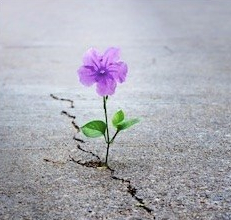
Like a flower finding its way to the sun through a crack in the stone, that shimmering little strand found its way back to me. 

The very thing I feared would be most difficult has become easy, feels natural. Coming home to myself is simple, and honest. I am moving back toward the center of someone I’ve always known. It warms my heart, settles my belly, and brings perspective into sharp focus. I know where home is now. And I see that I was right here all the time. 

::Big Brown Boots::

At Marquette School every day, Monday through Friday, started with Holy Mass.

Each class sat together with their Benedictine nun sitting proudly in charge of the group.

Once I received Holy Communion, I was able to partake every morning. This was back during the days when it was the rule to abstain from food after midnight in order to receive the Sacrament.

So I received it every morning. Recipients would file into the lunchroom to break their fast after Mass. My mother tied a dime and a nickel into the corner of a handkerchief. This bought me a cup of hot chocolate and one glazed donut. At that young age, this seemed the prize, and I confess to you now that – more often than not – it was that cocoa and that donut in my head when the priest placed the Host on my tongue.

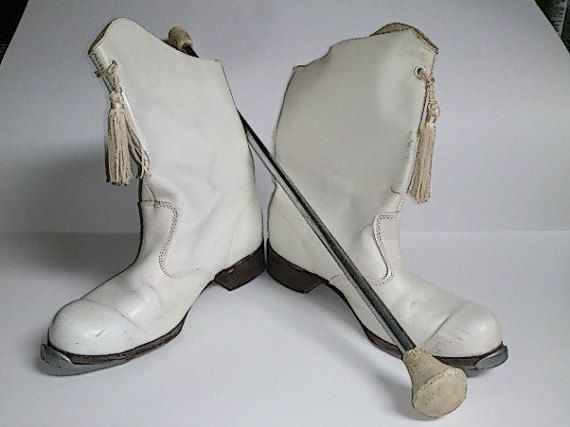
At one point I needed rubber boots. I dreamt of getting a pair of white boots with a big tassel on the front. I’d seen the drum majorettes wear them and that was exactly what I wanted!

The next memory that comes to mind is me, late to Mass, shlepping down the aisle in big, brown rubber boots. Christ the King church was filled with every student in the school, and was dead silent except for me, age six, clod hopping my way down that center aisle to the front pews, where the first graders sat. I wished the marble floor would swallow me up.

When purchasing them my mother had pointed out, quite briskly, that my brother could wear them once I’d outgrown them which – give the size – would surely have taken several years.

I hated my mother, I hated my brother, I hated those big brown boots, and I hated myself for all that hatred. I knew, in my freshly ordained young heart, that hatred was a sin. So I hated, more than anything, the hatred that I had.

It seems like I wore those big brown boots for years. At first every time I pulled them on, I willed them to be white boots with a big tassel on the front.

They never were anything but brown rubber.

Such a big lesson in humility for a six year old.

::Nanny’s Back Porch::

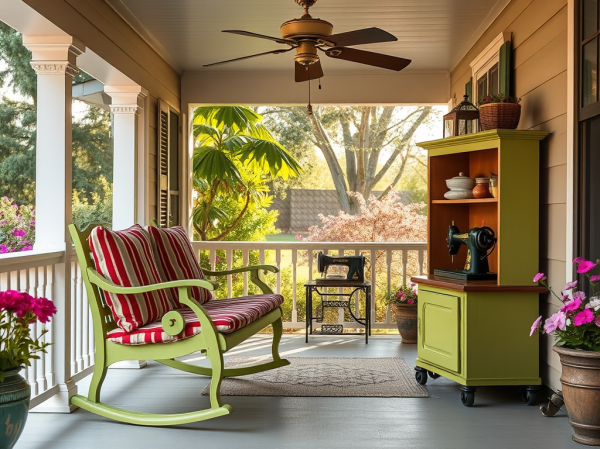
I remember the glider. The arms and frame were painted chartreuse green. The cushions were upholstered in oil cloth with wide red and white stripes.

Nanny sat on it every morning with her cup of coffee and the morning newspaper. She drank her coffee in a china cup that sat on its own saucer. There were delicate flowers hand painted on them both. She added half and half to the coffee until it looked like caramel.

I remember the treadle machine. It sat against the back wall next to the door on the the concrete patio. The patio was large, and had a lofty roof. The area was cooled with a large ceiling fan that hung from the rafters.

I remember the gentle, rhythmic sound of that fan, and the air that it created.

Nanny’s patio was a place where I knew I could do anything. It was almost sacred in that way, though I didn’t know it at the time. But every weekday morning during my ninth summer, I did my chores, then called my Nanny.

“Nanny? Can I come over?”

“Come on, baby.”

I packed my little cardboard suitcase with my doll and fabric scraps, then walked the two and a half blocks to Nanny’s house.

I remember climbing the steps leading to her house. The front porch had steps of its own. Wrought iron columns painted chartreuse on each corner. Two pink flamingos stood amongst the flowers in front.

The house wall of the porch was knotty pine. A mailbox hung on the left side of that wall. It looked like a covered wagon.

Exactly like a covered wagon.

Nanny made it.

I followed the sidewalk around the left of the house to the back. When I reached the back, I lifted the latch on the large black iron gate. It slowly rolled open, I walked into the back and pushed it shut behind me.
Nanny was there on the glider, her back to me, holding the newspaper akimbo in front of her.


When I think about it now, it makes me tear up. I didn’t know then, didn’t understand, how hungry I was for a space where I could be my unbridled creative self.
At home the message was clear: do your chores, stay out of the way, be quiet. In other words, try not to suck too bad.

But here at Nanny’s, my nine year old shoulders dropped. The knot in my stomach let go. I could sew on the treadle all day long, and nobody would stop me. If I got to a place where I needed help, Nanny was there to lend it. No criticism, no shame, just safety.

I don’t recall her ever really championing my pursuits, but she never cut me down either. I was present and a participant in many of her own creative projects and, by that, I learned that anybody could do anything they dreamt up, all they needed to do was start.

I remember Nanny’s projects where she taught me to “sand with the grain,” to “paint in long, firm but gentle strokes on furniture,” and “never buy a sewing pattern, always make your own.”

Nanny would be horrified if she could see the pile of sewing patterns in my work room today, but all she taught me … about how to do things, and about trusting myself and my creative process – are literally what have inspired me and saved me.

::Breaks My Heart::

I was so young when I had my babies. I knew only enough to keep them diapered and fed and loved. I sensed there was something deeper still in the act of loving them, but I didn’t know how to get there. I thought about that often, and it broke my heart.

As my babies were growing up, I took them to Sunday school, and to church. They learned to ride bikes, they played dominoes and Uno. They jumped off the pier in Perdido Bay. I was there as mother, but also as observer. I tried to give them all of me. But I often thought that just fell short. And it broke my heart.

They grew into teenagers. Music blared, the house filled with their friends, and sometimes we laughed till our sides ached. Good, rowdy kids who pulled on the reins. It felt like I was always scrambling to keep up but I fell behind so often, and it broke my heart.

Now as I look back on those years. I swear, it feels like a different lifetime. My babies are grown, married, and my grandbabies are almost grown. My goal, my intention, is to always be there for them. But even now, it feels like I fall short, and it breaks my heart.

She had no idea how good a job she was doing. She always felt she never measured up to what she should be. I guess love is like that … you have so much to give, you give all you have, and yet there’s a longing to give more, to be more.

Now, when I tell them how sorry I am for any wrongs I might have done them during their childhood they laugh, feign outrage, and tell me to stop.

If I could, I would live long enough to spill love on all my kids till they day they die. 

But I can’t and it breaks my heart.

So I’ll just keep doing my brokenhearted best, as long as I’m here, and hope it’s enough.

::Every Little Piece::

People often ask me when I started to write.  Especially songwriting.

I can think of points along my childhood and teen years when I wrote to process feelings or moments; heartbreak. Confusion. Boys. But the truth is I’ve always, as long as I can remember, written it down.

I say that, and it strikes me quite odd that a tiny girl, not exposed to literary pursuits, would even think of writing.

I was a post war baby; my mother and daddy were young, beautiful, hard working. My daddy was a Navy man, and knew how to do just about everything. They were musical, and funny, but they were not the type to bury themselves in Tolstoy or Hemingway. They had better things to do: roll up the rug in the dining room on Saturday afternoon and dance to Benny Goodman and Kay Starr records. Or sit on the front stoop at sunset, leaning into each other, beer in hand, and watch the kids ride their trikes in the driveway.

So how did I end up here, at this keyboard? Or way back there, at that Big Chief tablet with my Dixon Laddie #304?

I remember a moment when I was five. I was sitting on the swing in the back yard at 1563 North Marion. The sky was so blue, and I was so happy, I wanted to write a song about how I felt. I threw my head back, and instead of words coming out, I cried. My happy went heartbroken in that moment; I wept, because I knew I was too little to write a song that sounded like the ones on the radio.

And it’s interesting, isn’t it? How I remember that moment so clearly. How even as I think about it, I am “back there,” under that blue sky. In that back yard on that swing. My stomach even grabs for a second as the feelings I had then are here with me now.

So I guess you could say the writing thing has always been part of what I am. I remember in first grade, Sister Dianna was teaching us a song, and I was saying the words with her. She stopped, looked at me, and said,

“Mary Cecelia, do you know this song already?” No, I didn’t. I’d never heard it before. But somehow, I knew what would come next in the lyrics. Didn’t everybody? No, it turns out. They didn’t.

In third grade, Sister Mary Damien announced that the Highschool newspaper class was asking for poems from the grade school. They were going to publish one poem in the next edition of their paper. We were to turn our poems in the next day. My heart jumped, and my head started spinning with the tomes I would write.

That night at home, I took out my Big Chief tablet and my Laddie pencil, and I wrote. I wrote at least a half dozen one-stanza poems. I gave each stanza a name, and its own sheet of lined paper. I made the pages as neat as my third grade southpaw printing could get.

The next morning, I shuffled into the classroom with my classmates, laid my stack of poems on the corner of Sister’s desk, and took my seat. I watched her eagerly, hoping she would be proud of me.

Finally, Sister Damien walked over to her desk and picked up my pages. She leafed through them, then ripped them in half and threw them in the waste basket. As she did so she looked up at me briefly and stated,

“You were not to copy out of a book.”

My stomach lurched. My face turned hot. My eyes welled up. I was horrified, for several reasons:

First, it would never have occurred to me to turn in someone else’s work; the fact that she thought I would do such a thing made me want to cry.

Second, even at seven years of age, I was in a panic: those were the only copies I had. I learned an important lesson that day: always make duplicates.

Third, though my classmates were laughing at me, I was more concerned with people thinking I had such a flawed moral compass. They clearly didn’t know me at all.

On another level, buried deep beneath my chaotic feelings, was a little voice that whispered,
“Hmmm. They must have been good. REALLY good. She thought you copied them out of a book.”

A backhanded compliment from a nun, saying my work was so good I could not have done it. I’ve lived a lifetime of twisted victories like that.

In fourth grade, we had music class two mornings a week. One morning the music teacher announced that there would be a music program, and 

that we would be in it. She then said to the class,
“We will need someone to sing the solo. Are there any solo singers in here?”

The entire class turned, without a sound, and pointed at me. All I’d ever done was sing with everyone else.  I was completely unaware of my own voice. With all those fingers and eyes directed at me, I buried my face in my arms and cried.

Eventually I did sing the solo in the program that year. And I kept writing. There were times, big stretches in fact, when I was writing for my life. And music is the silver thread that held onto me, that’s always kept me tethered here.

Truth is, writing and music have always laced the pieces of my life together, helped me make sense of myself, this world, and the path I’m on. They still do.

I used to think maybe these things were pieces of generations past, pulling me back. But I’m starting to believe maybe they’re pieces of the future, pulling me forward.
Either way, I’ll take it. And I’ll write and sing every little piece of my life together, for as long as I’m here.

::Faith, Hope, Trust::

I’ve had several conversations lately about “Hope” and “Faith.” People ask me: are they different, or are they the same? I’ve given it a lot of thought; reflection from my seminary days. I’m going to write down some perspectives I’ve discovered about it … mostly to clarify it in my own mind:

Faith is the element of knowing without seeing. It is the bedrock of my heart’s center, the knowing beyond understanding. We are born broken, and all long for redemption, for goodness, to finally believe we are lovable. Most of us are afraid to believe that, but it’s a critical piece on the journey to wholeness as the Father created us.

I know that my Creator’s Almighty fingerprints are all over me. I know that, in spite of my failure to always exercise “right use of will,” His plan is at work. When I feel alone, when I feel without hope, “hopeless,” it is I who have moved off center. The Creator – being truth and love – never yields, never moves. The truth is that my Father will be standing, arms outstretched, a beacon of Light, long after the noise of falsehood has collapsed under its own weight.

How can I declare this? How can I be so certain that these things are true? I have no explanation except experience, and … faith.

My parents did the best they could, but their profound brokenness saturated every thread of my childhood. Even so, it did not define it. I didn’t realize it at the time, but my childhood was defined by, and my heart was protected by, my faith.

I was born with it. In my earliest days I thought everybody was. I can remember even as a tiny girl, age two or three, looking up to the clouds, talking to the angels. No one told me they were there. I knew it. I could see them. And they saw me.

Growing up, Spirit surrounded me at some of the darkest points, when most would ask how a kid could make it through that. It was not remarkable to me. It was my “normal.” There were my parents. There was my faith. Faith was my trump card. It trumped everything. I always trusted it would be there.

And the best way I know to describe trust is, imagine a baby learning to walk. The Mama or the Daddy is right there, giving the toddler its freedom, but keeping watch in case the child starts to fall. She learns to trust that a parent will be there for her. Trust. Faith and trust. The baby is not “hoping” that someone will catch her. She moves forward on faith, “trusting” that protection is present.

Hope … hope springs eternal, but faithful hope in action is “trust.”

There are those who question the atrocities in this world, and ask how a loving God could allow such things. My answer is, we are human beings with free will, and we are each given a moral compass. Free will has a perfectly calculable algorithm called “cause and effect.” Do many people suffer from the actions of others? Without question. I believe that all the inhumanity in this world is the expression of people who are driven by their own brokenness. Happy, loving people do not have on their agenda the harming or destruction of others.

Men are not evil. Women are not suffered. We are all brokenhearted. Casting aspersions based on ANYthing – gender, race, religion, nationality … only causes us to further break our own hearts. Division helps nothing, heals nothing, takes us closer to nothing good. It carries us further into the darkness.

Satan is about separation. People often attempt to … “hope out a plan.” And I don’t think I’ve ever seen it work … in large part, because they had no faith that it would. This is a process of isolation and futility. 

Separation tells us to make a plan, and cross our fingers, but don’t count on it, ’cause people suck and shit happens. And with this approach, it probably will.

God is about connection. Hope-as-Trust is the fierce tangent of faith that gives us the fire to move forward smiling, in spite and in Light. When we are in sync with that Divine energy, we make plans, but remain open to the fact that it could all shift, and may even appear to fall apart so that other things can fall together. We are flexible, and willing, and openhearted. We believe that all things will work together for good.

In either case, everybody believes in something. And whatever we believe, we’re right.

The best, most radical thing we can do for ourselves and the world … is to strive to be exactly who God breathed life into at the moment of our birth. If we all, every person on the planet, would be our authentic selves for one hour, the transformation would be miraculous. Instantaneous. The world could never again return to its former state of being.

My advice, if I have any to give, is this: be brutally honest, and ultimately gentle with yourself. Let yourself have, and hold, the truths of who you are. Look deeply into your own eyes. Be tender with your own shattered places. Hold closely those parts you have a hard time embracing. Make that list of loving things you’d do for someone else, and do them for you. We love others in direct proportion to our love of the Self God created in us.

My prayer is that every person, everywhere, will ultimately bear witness to their own loveliness, their own lovability. We will discover that the peace we long for abides in us. And it’s been right there all the time.

::Being True::

Truth. Being true. At this point in my life, I’m longing, more than ever 

before, to be that. To be true. To be the authentic person I was created to 

be.

When I was small, about four or five, I was the truest me I’ve ever been. Some say that at that age we are perfectly connected, above and below. We are still holding the hand of God. And we are waking up to the earthly world. I think that’s the purest description of it; it rings true. 

The years went by. I got older, and lost track of the Hand I was holding, or if I was still holding it at all.

I got caught up in the world of school, and parents, and siblings, and trying to get things right … early on, I fell into the habit of shaping myself to fit whatever it was they thought I should be. 

“Be sweet.” “Be good.” Be quiet.”

In my private hours, though … in my little back bedroom at 1135 South Quaker … I would lean my forehead against the windowpane, look out at the trees, and wonder who I was. I was eight years old, and I had already lost myself.

Life kept on, years passed, more siblings were born, and I fell further and further down the pecking order. Some people think being the oldest has its benefits. I’d argue that being oldest has its burdens. The only real benefit that I could see then was, I’d get out of the house and on my own first. And as a teenager, I marked the days with a black X on the calendar I hid under the mattress.

College was a waste. I had a full scholarship, but no understanding of how life worked, who I was in it, or where I was headed. As I left for college, my mother’s final words to me were, “I don’t know why you’re doing this. You’re just going to go up there and fail.”

And I never disobeyed my mother.

Alcoholic parents tend to leave their children rudderless. In my case, it seemed deliberate, though I didn’t know anything was missing at the time. I can see now that I had no “true North;” I didn’t even know there was one.

Adding it all up, it breaks my heart a little. That girl had so much talent, in so many areas; so many gifts that could have been developed. All she’d ever wanted was to be true, to have people see her as she really was. But by that time it had been ingrained in her that who she was, was unacceptable. Unloveable. So she really had no choice, did she? She’d be who they wanted, so she wouldn’t be alone. She’d let the world have glimpses of pieces of herself every now and then, but the whole picture was hidden from view.

I got pregnant, and got married, and that baby kept my young husband out of Vietnam. We were so young, college students who had no clue who we were or what we were getting into. 

But we jumped in with both feet, and I think I can say that we each gave it our best shot, at least in the beginning. 

It was fresh and sweet, the way new beginnings are. We had our baby girl, and in another two years four months, our baby boy was born. College guy friends hung out at our little house, and I’d cook for them every so often. Life was good, as good as it could be during wartime. Music, and laughter, and babies. We were blessed.

But eventually, the nagging of my authentic self got so loud that at times it was all I could hear. I tried to quiet it with projects of my own while the babies were sleeping. I told myself I was the problem, and to “Be sweet.” “Be good.” “Be quiet.” This went on for years. 

I had a third pregnancy, but I didn’t know it at the time. I just knew something wasn’t right. I was bleeding so hard, I dropped clots on the way to the bathroom. My doctor was having me come in for bloodwork every Friday. I was young, twenty-six, and didn’t even know enough to question him about anything. I lost so much weight. I look at pictures from back then and I can’t believe no one said anything to me about it.
Eventually, during the month of my twenty-seventh birthday, I had a complete hysterectomy. After the surgery, the doctor told me that I’d had an ectopic pregnancy. He said I’d needed five units of blood, and that my uterus was granulated and completely prolapsed. I had the reproductive organs “of a woman in her nineties.” I cried. For years. 

That first night, post surgery, my Daddy came to my room, still in his suit and tie from work, and fed me ice chips all night.
My mother never came, never called, until the final day I was there. She showed up unannounced, breezed into the room bright and cheery, with two of my cousins in tow – sweet cousins whom I had not seen since childhood. I was horrified. 

I think that was the moment I realized that my mother had never known me, or cared to know me. 

Due to as severe nursing shortage, I hadn’t been given so much as a sponge bath all week. All I’d done was lie in that bed and cry, I was so broken. The girl in me wanted her mama, but my mother had brought a party. Not good. Not appropriate. Not kind. Not true. 

It took years to accept the fact that there would never, ever be anymore babies. That was such a hard stretch of time. My heart broke, over and over, like ripples from a stone. I prayed to God that He would hold close the baby I lost, and that He would heal my heart.

I loved up on my two little ones and did the best I could to show them that who they truly are is who I wanted them to be. I said “Yes” as often as possible, and “No” when necessary. 

All of that is so far away, so far in the past. There are details, both sordid and sublime, that I’ve skipped over, but the throughline is my focus: I dodged, then denied, then bartered with my true self. Let her out a little, hide her completely, neither one worked. If I let her out a little, she’d end up fully exposed because there was no controlling the truth of her. If I hid her completely, I coped with that choice by using destructive habits to keep her under wraps. 

Looking back, it’s hard to admit. But I can see clearly from here that missed opportunities happened because I was never fully present to claim them. 

And then there’s this: 

God’s plan for me is still what it always was. My choices have not changed that. The ‘destination’ He has for my life can be reached by any number of routes. 

As C.S. Lewis says, “For you will certainly carry out God’s purpose, however you act, but it makes a difference to you whether you serve like Judas, or like John.”

The marriage finally fell apart twenty-five years later. There was nothing left to save. It was brutal and heartbreaking; I just knew that God could not do what He wanted with me inside it.

Now, decades later, I am still single. I have not figured out how to be fully who I am inside a primary relationship. I have friends, my children are married, and I have grandchildren.

All of those relationships are healthy, and good. I am at peace with being myself now. I’ve learned to ‘temper’ certain aspects, and I’ve grown in wisdom of who I am, of what’s appropriate. I have, finally, found my “true North.” I am honest about the past, both the good and the bad. Painful events caused by people I loved really happened. I’ve written some about those, and I will write more, as I’m moved to do so. But more than that, I hope to write about the lessons learned, and the goodness that’s been found in all of it.

And, in the end, I’m reminded of what Anne Lamott said:

“You own everything that happened to you. Tell your stories. If people wanted you to write warmly about them, they should have behaved better.” 

::So The Kids Will Know::

I want my kids to know.

I’ve been writing since I could hold a pencil. In my mind, even then, it’s “what you do,” isn’t it? Write. Draw. Express yourself on the page.

And I’ve done a lot of it through the years – decades, really – that I’ve been alive.

But recently I’ve been thinking about something. And that is, what will my writing tell my children about me?

I never really knew my mother. She was a cold and distant woman, and no matter how hard I tried, I could never bridge the gap. I could not reach her.

She died on October 31. Halloween. In some weird, standup comedy way, that seemed fitting. But the humor dies out and gives way to the heartbreaking fact that whoever she was will remain a mystery.

Now back to my thought about my kids. I want them to know their mother. I want them to have all the pieces, so they can more clearly understand themselves. I want them to have no questions about who I am, who I was, or why I was and am this way. They need to know.

So now we’re at the memoir. I’ve dragged my feet through a couple of decades, because a lot of the truth isn’t pretty. And on some level I kept thinking the people who treated me poorly would die, and then the book would be safe to write.

But it’s not that simple. It never is. My goal has never been to disparage anybody. My intention is to tell my story, and to share how I survived all that happened. 

I want my children to know what sturdy stock they’re made of. They need to know how, on more than one occasion, their mother “sucked it up” and carried on.

They need to know that the three-legged stool I’ve referenced all their lives – the one with the legs of faith, music, and humor – has, in very real terms, always held me up and held my life together. 

I pray for the courage to write it all. I hope that readers will see that the pattern of broken pieces of their lives is, from a distance, a stunning mosaic.

I hope people understand that the sturdy, fragile, holy, horrible, inspiring, hysterical, happy, messy lives they live are beautiful.

I hope my kids fully embrace it all; that knowing who their mama is will help them see that if I could do it, they can too.

Blog at WordPress.com.

Up ↑