::Big Brown Boots::

At Marquette School every day, Monday through Friday, started with Holy Mass.

Each class sat together with their Benedictine nun sitting proudly in charge of the group.

Once I received Holy Communion, I was able to partake every morning. This was back during the days when it was the rule to abstain from food after midnight in order to receive the Sacrament.

So I received it every morning. Recipients would file into the lunchroom to break their fast after Mass. My mother tied a dime and a nickel into the corner of a handkerchief. This bought me a cup of hot chocolate and one glazed donut. At that young age, this seemed the prize, and I confess to you now that – more often than not – it was that cocoa and that donut in my head when the priest placed the Host on my tongue.

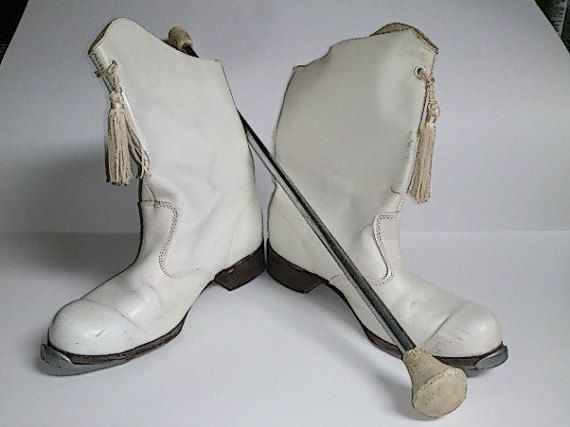
At one point I needed rubber boots. I dreamt of getting a pair of white boots with a big tassel on the front. I’d seen the drum majorettes wear them and that was exactly what I wanted!

The next memory that comes to mind is me, late to Mass, shlepping down the aisle in big, brown rubber boots. Christ the King church was filled with every student in the school, and was dead silent except for me, age six, clod hopping my way down that center aisle to the front pews, where the first graders sat. I wished the marble floor would swallow me up.

When purchasing them my mother had pointed out, quite briskly, that my brother could wear them once I’d outgrown them which – give the size – would surely have taken several years.

I hated my mother, I hated my brother, I hated those big brown boots, and I hated myself for all that hatred. I knew, in my freshly ordained young heart, that hatred was a sin. So I hated, more than anything, the hatred that I had.

It seems like I wore those big brown boots for years. At first every time I pulled them on, I willed them to be white boots with a big tassel on the front.

They never were anything but brown rubber.

Such a big lesson in humility for a six year old.

::Every Little Piece::

People often ask me when I started to write.  Especially songwriting.

I can think of points along my childhood and teen years when I wrote to process feelings or moments; heartbreak. Confusion. Boys. But the truth is I’ve always, as long as I can remember, written it down.

I say that, and it strikes me quite odd that a tiny girl, not exposed to literary pursuits, would even think of writing.

I was a post war baby; my mother and daddy were young, beautiful, hard working. My daddy was a Navy man, and knew how to do just about everything. They were musical, and funny, but they were not the type to bury themselves in Tolstoy or Hemingway. They had better things to do: roll up the rug in the dining room on Saturday afternoon and dance to Benny Goodman and Kay Starr records. Or sit on the front stoop at sunset, leaning into each other, beer in hand, and watch the kids ride their trikes in the driveway.

So how did I end up here, at this keyboard? Or way back there, at that Big Chief tablet with my Dixon Laddie #304?

I remember a moment when I was five. I was sitting on the swing in the back yard at 1563 North Marion. The sky was so blue, and I was so happy, I wanted to write a song about how I felt. I threw my head back, and instead of words coming out, I cried. My happy went heartbroken in that moment; I wept, because I knew I was too little to write a song that sounded like the ones on the radio.

And it’s interesting, isn’t it? How I remember that moment so clearly. How even as I think about it, I am “back there,” under that blue sky. In that back yard on that swing. My stomach even grabs for a second as the feelings I had then are here with me now.

So I guess you could say the writing thing has always been part of what I am. I remember in first grade, Sister Dianna was teaching us a song, and I was saying the words with her. She stopped, looked at me, and said,

“Mary Cecelia, do you know this song already?” No, I didn’t. I’d never heard it before. But somehow, I knew what would come next in the lyrics. Didn’t everybody? No, it turns out. They didn’t.

In third grade, Sister Mary Damien announced that the Highschool newspaper class was asking for poems from the grade school. They were going to publish one poem in the next edition of their paper. We were to turn our poems in the next day. My heart jumped, and my head started spinning with the tomes I would write.

That night at home, I took out my Big Chief tablet and my Laddie pencil, and I wrote. I wrote at least a half dozen one-stanza poems. I gave each stanza a name, and its own sheet of lined paper. I made the pages as neat as my third grade southpaw printing could get.

The next morning, I shuffled into the classroom with my classmates, laid my stack of poems on the corner of Sister’s desk, and took my seat. I watched her eagerly, hoping she would be proud of me.

Finally, Sister Damien walked over to her desk and picked up my pages. She leafed through them, then ripped them in half and threw them in the waste basket. As she did so she looked up at me briefly and stated,

“You were not to copy out of a book.”

My stomach lurched. My face turned hot. My eyes welled up. I was horrified, for several reasons:

First, it would never have occurred to me to turn in someone else’s work; the fact that she thought I would do such a thing made me want to cry.

Second, even at seven years of age, I was in a panic: those were the only copies I had. I learned an important lesson that day: always make duplicates.

Third, though my classmates were laughing at me, I was more concerned with people thinking I had such a flawed moral compass. They clearly didn’t know me at all.

On another level, buried deep beneath my chaotic feelings, was a little voice that whispered,
“Hmmm. They must have been good. REALLY good. She thought you copied them out of a book.”

A backhanded compliment from a nun, saying my work was so good I could not have done it. I’ve lived a lifetime of twisted victories like that.

In fourth grade, we had music class two mornings a week. One morning the music teacher announced that there would be a music program, and 

that we would be in it. She then said to the class,
“We will need someone to sing the solo. Are there any solo singers in here?”

The entire class turned, without a sound, and pointed at me. All I’d ever done was sing with everyone else.  I was completely unaware of my own voice. With all those fingers and eyes directed at me, I buried my face in my arms and cried.

Eventually I did sing the solo in the program that year. And I kept writing. There were times, big stretches in fact, when I was writing for my life. And music is the silver thread that held onto me, that’s always kept me tethered here.

Truth is, writing and music have always laced the pieces of my life together, helped me make sense of myself, this world, and the path I’m on. They still do.

I used to think maybe these things were pieces of generations past, pulling me back. But I’m starting to believe maybe they’re pieces of the future, pulling me forward.
Either way, I’ll take it. And I’ll write and sing every little piece of my life together, for as long as I’m here.

::Being True::

Truth. Being true. At this point in my life, I’m longing, more than ever 

before, to be that. To be true. To be the authentic person I was created to 

be.

When I was small, about four or five, I was the truest me I’ve ever been. Some say that at that age we are perfectly connected, above and below. We are still holding the hand of God. And we are waking up to the earthly world. I think that’s the purest description of it; it rings true. 

The years went by. I got older, and lost track of the Hand I was holding, or if I was still holding it at all.

I got caught up in the world of school, and parents, and siblings, and trying to get things right … early on, I fell into the habit of shaping myself to fit whatever it was they thought I should be. 

“Be sweet.” “Be good.” Be quiet.”

In my private hours, though … in my little back bedroom at 1135 South Quaker … I would lean my forehead against the windowpane, look out at the trees, and wonder who I was. I was eight years old, and I had already lost myself.

Life kept on, years passed, more siblings were born, and I fell further and further down the pecking order. Some people think being the oldest has its benefits. I’d argue that being oldest has its burdens. The only real benefit that I could see then was, I’d get out of the house and on my own first. And as a teenager, I marked the days with a black X on the calendar I hid under the mattress.

College was a waste. I had a full scholarship, but no understanding of how life worked, who I was in it, or where I was headed. As I left for college, my mother’s final words to me were, “I don’t know why you’re doing this. You’re just going to go up there and fail.”

And I never disobeyed my mother.

Alcoholic parents tend to leave their children rudderless. In my case, it seemed deliberate, though I didn’t know anything was missing at the time. I can see now that I had no “true North;” I didn’t even know there was one.

Adding it all up, it breaks my heart a little. That girl had so much talent, in so many areas; so many gifts that could have been developed. All she’d ever wanted was to be true, to have people see her as she really was. But by that time it had been ingrained in her that who she was, was unacceptable. Unloveable. So she really had no choice, did she? She’d be who they wanted, so she wouldn’t be alone. She’d let the world have glimpses of pieces of herself every now and then, but the whole picture was hidden from view.

I got pregnant, and got married, and that baby kept my young husband out of Vietnam. We were so young, college students who had no clue who we were or what we were getting into. 

But we jumped in with both feet, and I think I can say that we each gave it our best shot, at least in the beginning. 

It was fresh and sweet, the way new beginnings are. We had our baby girl, and in another two years four months, our baby boy was born. College guy friends hung out at our little house, and I’d cook for them every so often. Life was good, as good as it could be during wartime. Music, and laughter, and babies. We were blessed.

But eventually, the nagging of my authentic self got so loud that at times it was all I could hear. I tried to quiet it with projects of my own while the babies were sleeping. I told myself I was the problem, and to “Be sweet.” “Be good.” “Be quiet.” This went on for years. 

I had a third pregnancy, but I didn’t know it at the time. I just knew something wasn’t right. I was bleeding so hard, I dropped clots on the way to the bathroom. My doctor was having me come in for bloodwork every Friday. I was young, twenty-six, and didn’t even know enough to question him about anything. I lost so much weight. I look at pictures from back then and I can’t believe no one said anything to me about it.
Eventually, during the month of my twenty-seventh birthday, I had a complete hysterectomy. After the surgery, the doctor told me that I’d had an ectopic pregnancy. He said I’d needed five units of blood, and that my uterus was granulated and completely prolapsed. I had the reproductive organs “of a woman in her nineties.” I cried. For years. 

That first night, post surgery, my Daddy came to my room, still in his suit and tie from work, and fed me ice chips all night.
My mother never came, never called, until the final day I was there. She showed up unannounced, breezed into the room bright and cheery, with two of my cousins in tow – sweet cousins whom I had not seen since childhood. I was horrified. 

I think that was the moment I realized that my mother had never known me, or cared to know me. 

Due to as severe nursing shortage, I hadn’t been given so much as a sponge bath all week. All I’d done was lie in that bed and cry, I was so broken. The girl in me wanted her mama, but my mother had brought a party. Not good. Not appropriate. Not kind. Not true. 

It took years to accept the fact that there would never, ever be anymore babies. That was such a hard stretch of time. My heart broke, over and over, like ripples from a stone. I prayed to God that He would hold close the baby I lost, and that He would heal my heart.

I loved up on my two little ones and did the best I could to show them that who they truly are is who I wanted them to be. I said “Yes” as often as possible, and “No” when necessary. 

All of that is so far away, so far in the past. There are details, both sordid and sublime, that I’ve skipped over, but the throughline is my focus: I dodged, then denied, then bartered with my true self. Let her out a little, hide her completely, neither one worked. If I let her out a little, she’d end up fully exposed because there was no controlling the truth of her. If I hid her completely, I coped with that choice by using destructive habits to keep her under wraps. 

Looking back, it’s hard to admit. But I can see clearly from here that missed opportunities happened because I was never fully present to claim them. 

And then there’s this: 

God’s plan for me is still what it always was. My choices have not changed that. The ‘destination’ He has for my life can be reached by any number of routes. 

As C.S. Lewis says, “For you will certainly carry out God’s purpose, however you act, but it makes a difference to you whether you serve like Judas, or like John.”

The marriage finally fell apart twenty-five years later. There was nothing left to save. It was brutal and heartbreaking; I just knew that God could not do what He wanted with me inside it.

Now, decades later, I am still single. I have not figured out how to be fully who I am inside a primary relationship. I have friends, my children are married, and I have grandchildren.

All of those relationships are healthy, and good. I am at peace with being myself now. I’ve learned to ‘temper’ certain aspects, and I’ve grown in wisdom of who I am, of what’s appropriate. I have, finally, found my “true North.” I am honest about the past, both the good and the bad. Painful events caused by people I loved really happened. I’ve written some about those, and I will write more, as I’m moved to do so. But more than that, I hope to write about the lessons learned, and the goodness that’s been found in all of it.

And, in the end, I’m reminded of what Anne Lamott said:

“You own everything that happened to you. Tell your stories. If people wanted you to write warmly about them, they should have behaved better.” 

::HARD LINES::

Stop

I had an interesting conversation with my business partner this afternoon. We were discussing how to handle a somewhat delicate situation with a person we both love and respect. This person unknowingly violated business protocol, in a way that left us very concerned. We needed to do two things: clean up the mess, and establish professional boundaries with this colleague. And we want to do it without losing the relationship.

At one point in our talk I mentioned “hard lines.” After we ended the call I got to thinking, how does a person learn to develop “hard lines?” You know, life’s guard rails — what we use to keep our principles, values, and relationships on track. 

I’m an adult child of alcoholics. Growing up I just knew they drank a lot, and did it every day. I didn’t say ‘alcoholic’ until I was grown and in therapy. I didn’t call them that because I hadn’t really thought about it. Every family has their own brand of “normal,” and drinking parents was part of our family brand. 

But what happens when the parents drink, and drink a lot, is that boundaries don’t exist. As a kid, I didn’t know. Anything. My goal was survival. Because at any given moment, what once was the “rule” suddenly became the “violation.” So — other than what I learned through the nuns at school, or through the Church, there were no guard rails, no consistent “hard lines.” 

In my early adult life, I had no clue what pieces of me were missing. As a result I did what most of us do: I partnered with a lovable boy whose missing pieces matched my own. Our dysfunctions fit together perfectly. We became enmeshed, our lines blurred, but it all felt normal to both of us; neither one of us had a clue what lay ahead.

As the years passed, we each continued to grow and change; our sharp edges began to cut deep into each other, and started to sever who we were as a couple. Eventually we divorced. By that time I had been in therapy and was learning about developing healthy boundaries. Week after week I sat there in my therapist’s office, holding my broken heart, and seeing clearly, for the first time, what we had been; I shed tears over what we could never be. 

Establishing boundaries is not always easy. But it’s always healthy. Boundaries keep relationships clean, and honest. With everything on the table, with no truths left twisted or untold, there is nothing to fear. The coast is clear for real connection. 

The best thing a parent can do for their kiddos is model healthy boundaries early on. It has to be a consistent lesson of “Choice, meet consequence.” But parents who have no established boundaries, or “hard lines,” in their own lives, don’t even know it’s a thing to nurture in their children. Consequently, when the children become adults, they’re out in the world, operating without their own fully established guard rails. 

This is a recipe for messy relationships. It can leave young adults floundering, trying to figure out how they keep getting it wrong. But often it’s as simple — and as complicated — as knowing they need to find their own boundaries; that it’s important to stick to them, even when it’s tough to do so.

So here’s to the freedom to say “No,” or “Stop,” or “Here’s the whole, ugly truth,” without having to fear that we’re getting it wrong. If we’re staying true to our own principles, and respecting our own “hard lines,” no matter how tough things get, we’ll always come out whole. And we’ll end up in relationships with people whose boundaries we respect, and who respect what drives us. 

So I trust my business partner and I will not only keep the relationship with our colleague. I’m thinking the bond will grow even stronger through our being honest, kind, and maintaining our ‘hard lines.’

Life doesn’t get much better than that.

::The Journey::

journey of love

It’s January 12, 2019. My last post was on returning home after my mother’s funeral. She died on Halloween Day. My Daddy died three years ago. So I am now, in my dotage, an orphan. An old woman orphan.

These days, life stretches out behind me, like it stretched out before me when I was young. I’ve been here awhile, and sometimes I wish I’d handled things differently, made different choices, seen different outcomes. But that’s a tight, smoking circle that always leads me back to this truth: the lessons learned were worth the price of the trip. I am who I am thanks to every little thing. And yet …

Days come and go, the sun rises and sets. I make choices every morning, change my mind mid-coffee, reevaluate over lunch, set out to accomplish “at least one material thing” mid afternoon, resign myself to the day I’ve spent over dinner, and start looking at the clock around six thirty, wondering if it’s too soon for pajamas. Do you do that? I don’t know, maybe I’m an island of internal conflict, arm wrestling with procrastination … winner gets ice cream.

But in the grand scheme of life, there are some things that I can feel good about checking off.

  • I’ve come through decades of counseling, most of it good, in my quest to unpack all the baggage, and to unearth who I was put here to be.
  • I’ve painted houses, and portraits, written articles, and songs, designed homes, developed media projects … each activity a response to the creative pool that undulates inside me. I never reached for fame. I was and am always on a mission to follow that creative urge, whatever it was or is, to its completion. 
  • Loving, more than being loved, has been my modus. “Spill love everywhere” is a motto I embrace. Even if it seems invisible; even if it appears, in the immediate instant, to make no difference at all. Keep it up. Keep going. And when I spill love on others, I can’t help but get some on myself. Love is messy. It gets all over everything. 

A favorite quote:

“Her finely touched spirit still had its fine issues, though they were not widely visible. Her full nature spent itself in channels which had no great name on the earth. But the effect of her being on those around her was incalculably diffusive, for the growing good of the world is partly dependent on unhistoric acts; and that things are not so ill with you and me as they might have been, is half owing to the number who lived faithfully a hidden life, and rest in unvisited tombs.” – George Eliot, “Middlemarch” 

In this huge world, with all these people, it’s easy to want to be relevant. Publicly relevant. To make a difference, and be recognized for it. But I’m consciously choosing, in this little life, to focus on the doing rather than on the being. It matters not who knows it, other than I. I know. I know the truth; the beautiful, ugly, magnificent, broken truth about who I am, what I’ve done/not done, for better or worse, throughout these years. 

When I lay my head down on the pillow at night, in the sober darkness, I am fully present for that truth. I beg God’s forgiveness, His mercy, and His grace. Broken people do broken things, every single day. We’re all broken. But we can — in our brokenness — aspire. Aspire to wholeness. And it’s love — of self, of others, of this life we live — that will get us there. 

::Dot and Robert::

Dot Parker and Robert Benchley


I didn’t know about her for years. Never heard of her. Then, one day, in the period I would soon dub ‘the dark night of my ex-husband’s soul’ she came. A light dawned.

I’d always been a creative girl, a passionate teen, then while wedded I morphed into an unsure and eagerly accommodating woman. When I finally acknowledged the “past due notice” and filed for “the divorce,” I realized I couldn’t speak. No, listen, I could string words together, I could even sound coherent on occasion, but the kernel of “me” at the heart of it all was missing. When did I grow so soft?

There I was, plowing through the molasses searching for my focus when, at a Screen Actors Guild Directors’ meeting, I met Nat Benchley. ‘Benchley, Benchley, let me think,’ I thought as I smiled that smile and shook his hand.

Nat immediately had me smitten, as most brilliantly eloquent men do … I do love a great mind. And his was incredible, I thought, until … well, his nickname for me was a little off putting. “Reverend Gorgeous.” I can barely type it even now. It makes me blush, and warms my heart. But that’s not the point here. The point is, Nat was sharing with me stories about his grandfather Robert, and how this woman, Dorothy Parker, was his sidekick and best friend.

Well, I’d never heard of the woman, and you already know exactly what I did. I looked Dorothy up, bought her books, checked her out … and thought, ‘HEY! I recognize that voice … that irreverent, brilliant, hysterically ironic voice. It . Sounds . Like . Me .’

So that was the first step, learning about Dot. The next meeting Nat and I attended was in New York, and he decided we should go some place called the Algonquin Hotel. Over martinis with three fat olives he educated me on the infamous “Vicious Circle” and — as we sat at that very same round table, regaled me with tales of how his Grandfather and Dot would hold court there everyday at lunch. And so, we and our colleagues sat. We laughed. We drank. Because, you know. Dot and Robert.

Hirschfeld drawings of Benchley, Parker, and company lined the walls. The more I learned, the more I was convinced: Nat and I should do a two-person show, Robert and Dot. I mentioned it to him. He loved it. But life got in the way, as it tends to do, and we never happened.

That was years ago, and I only remembered these things when reading a piece this morning by Dorothy Parker. I’m much older now, and am not sure I still have the swagger necessary to deliver a good “Dot” onstage. But I love my warm memories of Nat Benchley. I continue to relish Parker’s writing, her voice, and the very clear knowledge that it was she who, thanks to Nat, helped me find my own.

::My Creative Children::

Create Image

In high school I was told to choose. And each of the tellers told me to chose the thing that was theirs:

Sister Mary Judith said to choose writing

Sister Mary Thomas said to choose music

Sister Mary Dominica said to choose fine art

Sister Josephine said to choose fashion design

You MUST choose this one, each said. This is your gift, each said.

I said no. Was it the best answer? I guess I’ll never know, but I knew in my gut it’s the only answer I could give.

I saw each as one of my children. How do I choose one, and leave the others, orphaned?

How do I nurture one, and leave the others fallow? It was the craziest idea I’d ever heard. But I was just a kid, what did I know? These were brides of Christ telling me to do this. But I couldn’t.

First of all, as I now know, what the creative well is filled with is beyond my control. It is a central space whose energy flows through me. I cannot dictate to the well how it is to express itself. I can only say “yes” to whatever shows up.

I am not the boss of it. I am the steward; the guardian. It is up to me to facilitate, not to dictate.

In my adult life, there are creative threads that have expanded; writing grew to — not only prose or poetry, but a career in songwriting. Design grew to — not just fashion design — but a career in interior design. Music grew to a career as a vocalist. I guess you could say my ‘children’ had ‘children’ of their own.

I sometimes wonder if this is just me, not wanting to “settle down” with something that could organize my life in a way that some would call “adult.”  But when that thought comes to mind, the counter argument is always there to ask me, which of your creative ‘children’ would you have abandoned in favor of others?

The answer is, I cannot choose. I have not chosen. They choose me. Even now, in my dotage, I do not regret saying “YES” to all of them.

#SorryNotSorry

::MAYBE::

Box of Photos

Things in my life are the way they are, based on every choice I’ve made. They laid a road, end to end, that brought be here to this table today. Good or bad, for better or worse, here I sit; my greasy hair under a ball cap, my thoughts scattered and the censor in my brain telling me that what I’m writing now is not worth a damn.

I get sick of hearing my own voice tell my own stories. Are other people as sick of it as I am?  I don’t want to write cute, or clever. As Hemingway says, write real, about what hurts. I’ve kerfed around the edges of the pain for years, never hitting it dead center. I guess that’s real if you’re digging a trench, but I’m sort of stuck down here, looking for truth. And trying to dig my way out.

I could write about birds. But then my brain goes to the parakeet we had at 1135 South Quaker. My mother named it Perry Como. He was blue, with black wing tips, and a spot of lime green between his eyes. Thinking of him now I can smell his birdseed and that cage with the newspapers in the bottom.

When they let Perry out of that cage, he flew up and sat on the curtain rods. Every time he flew his wings made a loud flapping sound that scared my little brother.

Sometimes my mother would open Perry’s cage door, and wait. When my brother came walking through the livingroom, suddenly Perry would swoop down. My brother would scream and dive under the table, clutching the legs and sobbing. My mother raised her eyebrows, took a drag off her cigarette, and laughed. That taught me some pretty twisted things about how people treat those they claim to love. So yeah … count that little nugget as a lob to the center of the pain from the trenches.

Or maybe I could write about being a teenager. And dating.

Maybe I could write about the night a boy came to pick me up, and he had a long fringe of bangs. My little sisters peaked around the door giggling, “It’s a Beatle!” My Dad growled, “Is that your hair, boy, or is that a wig?”

Or I could write about another time my date arrived to take me to the school dance. He drove his car, parked, and my Dad drove us to school in our ’51 two door Pontiac. The two door thing is relevant because my date and my Dad sat in the front, I climbed into the back. In my formal. The thing I’ll never forget is the hood ornament. It was a glowing orange Indian Chief. I locked my eyes on that thing all the way to school, trying to ignore the awkward silence.

Maybe I could write about the faith, and the sense of humor, that have carried me on angel wings through the darkest of days, the brokenest of hearts. How, even in those moments … my date with the Beatles hair, me sitting in the back seat of that car … even then, in the recesses of my mind, I knew: “this is the rich stuff of which stories are made. I will write about this one day.”

Maybe today, sitting here at this table, wearing my ballcap, is that time.

::TOO SOON TO TELL::

The Good Book Open

A recent checklist:

Have you locked in on who you were put here to be?

Are you accomplishing all that you were put here to accomplish?

How much longer is your life’s to-do list?

How’s that memoir coming?

Will your work projects pay off?

What will be written on your grave marker?

Will you have a grave marker?

Will your grands know how much you loved them?

Will you have made a difference in any positive way?

What is the one thing, if you had to choose, that you’d want to be remembered for?

How will your children carry on once you’re gone?

What will happen to your writing?

What will happen to your artwork?

What will happen to your design work?

Once you’re gone, will you even care about any of this?

Questions that, once posed, tend to send me into one of two places: a deep and thoughtful period, or a moment of ironic flippancy where I say, “Who cares about that? I can only handle ‘now’.”

And really, those questions generally pop up only when I’m down. And I’m down so seldom that I had to conjure to bring them up at all.

I keep my eyes on the horizon, and my heart in Gilead. My path is my testimony, marked by my feet, which I put one in front of the other each day.

It is a varied, and a beautiful life. Trouble? Yes, we see trouble all around us. But we are not the trouble itself. No one is. We are the very love we seek; we are the center and the stillpoint of this amazing planet. And what we focus on increases. Think about that.

So, as I look back on this list of questions I raise, I can quietly and with blessed assurance say,

“It is too soon to tell. But I’ve read the Book. I know how this ends.

“And it is beautiful.”

Blog at WordPress.com.

Up ↑