::You Never Know::

"You are going to feel like hell if you never write the stuff that is tugging on the sleeves of your heart … your stories, visions, memories, songs; your truth, your version of things, in your voice. That is really all you have to offer us, and it's why you were born." – Anne Lamott
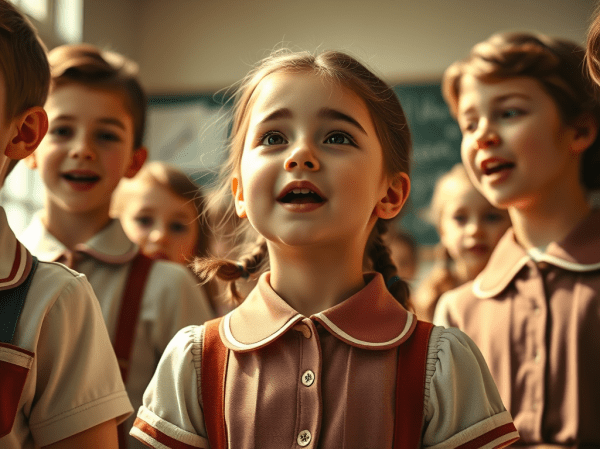
People often ask me when I started to write. Especially songwriting.
I can think of points along my childhood and teen years when I wrote to process feelings or moments; heartbreak. Confusion. Boys. But the truth is I’ve always, as long as I can remember, written it down.
I say that, and it strikes me quite odd that a tiny girl, not exposed to literary pursuits, would even think of writing.
I was a post war baby; my mother and daddy were young, beautiful, hard working. My daddy was a Navy man, and knew how to do just about everything. They were musical, and funny, but they were not the type to bury themselves in Tolstoy or Hemingway. They had better things to do: roll up the rug in the dining room on Saturday afternoon and dance to Benny Goodman and Kay Starr records. Or sit on the front stoop at sunset, leaning into each other, beer in hand, and watch the kids ride their trikes in the driveway.
So how did I end up here, at this keyboard? Or way back there, at that Big Chief tablet with my Dixon Laddie #304?
I remember a moment when I was five. I was sitting on the swing in the back yard at 1563 North Marion. The sky was so blue, and I was so happy, I wanted to write a song about how I felt. I threw my head back, and instead of words coming out, I cried. My happy went heartbroken in that moment; I wept, because I knew I was too little to write a song that sounded like the ones on the radio.
And it’s interesting, isn’t it? How I remember that moment so clearly. How even as I think about it, I am “back there,” under that blue sky. In that back yard on that swing. My stomach even grabs for a second as the feelings I had then are here with me now.
So I guess you could say the writing thing has always been part of what I am. I remember in first grade, Sister Dianna was teaching us a song, and I was saying the words with her. She stopped, looked at me, and said,
“Mary Cecelia, do you know this song already?” No, I didn’t. I’d never heard it before. But somehow, I knew what would come next in the lyrics. Didn’t everybody? No, it turns out. They didn’t.
In third grade, Sister Mary Damien announced that the Highschool newspaper class was asking for poems from the grade school. They were going to publish one poem in the next edition of their paper. We were to turn our poems in the next day. My heart jumped, and my head started spinning with the tomes I would write.
That night at home, I took out my Big Chief tablet and my Laddie pencil, and I wrote. I wrote at least a half dozen one-stanza poems. I gave each stanza a name, and its own sheet of lined paper. I made the pages as neat as my third grade southpaw printing could get.
The next morning, I shuffled into the classroom with my classmates, laid my stack of poems on the corner of Sister’s desk, and took my seat. I watched her eagerly, hoping she would be proud of me.
Finally, Sister Damien walked over to her desk and picked up my pages. She leafed through them, then ripped them in half and threw them in the waste basket. As she did so she looked up at me briefly and stated,
“You were not to copy out of a book.”
My stomach lurched. My face turned hot. My eyes welled up. I was horrified, for several reasons:
First, it would never have occurred to me to turn in someone else’s work; the fact that she thought I would do such a thing made me want to cry.
Second, even at seven years of age, I was in a panic: those were the only copies I had. I learned an important lesson that day: always make duplicates.
Third, though my classmates were laughing at me, I was more concerned with people thinking I had such a flawed moral compass. They clearly didn’t know me at all.
On another level, buried deep beneath my chaotic feelings, was a little voice that whispered,
“Hmmm. They must have been good. REALLY good. She thought you copied them out of a book.”
A backhanded compliment from a nun, saying my work was so good I could not have done it. I’ve lived a lifetime of twisted victories like that.
In fourth grade, we had music class two mornings a week. One morning the music teacher announced that there would be a music program, and
that we would be in it. She then said to the class,
“We will need someone to sing the solo. Are there any solo singers in here?”
The entire class turned, without a sound, and pointed at me. All I’d ever done was sing with everyone else. I was completely unaware of my own voice. With all those fingers and eyes directed at me, I buried my face in my arms and cried.
Eventually I did sing the solo in the program that year. And I kept writing. There were times, big stretches in fact, when I was writing for my life. And music is the silver thread that held onto me, that’s always kept me tethered here.
Truth is, writing and music have always laced the pieces of my life together, helped me make sense of myself, this world, and the path I’m on. They still do.
I used to think maybe these things were pieces of generations past, pulling me back. But I’m starting to believe maybe they’re pieces of the future, pulling me forward.
Either way, I’ll take it. And I’ll write and sing every little piece of my life together, for as long as I’m here.
“Beautiful Crazy” … written by Cece DuBois, Jillian Farrar, Michael Peterson, and Brett Westgrove …


When I was five or six I was drawn to the microphone at the Knights of Columbus spaghetti dinners. My Uncle John would step up on that stage and use it when he introduced Monsignor Fletcher to say the blessing. And when he announced the three piece band, made up of parishioners. Ladies with blue hair played the stand up bass, the accordion, and the saxophone. Their pearls and ear bobs swayed or bounced to the rhythms while the grownups danced.
But it was when they took their break, and the microphone stood up there all alone that I felt the pull. I wandered up. I sat on that stage, just a low riser from the floor. I pivoted and suddenly, I was there. I wandered over. I looked out at the people seated at long tables, talking and laughing. The microphone was about a head and a half taller than I was. No way could I reach it. So I stood.
Years later I would actually use microphones, in the studio and on stage. For years I worked in an industry where people think if you haven’t “sold” a song or gotten famous, you’re just a wannabe who didn’t quite have the stuff.
But the truth is, the fame part was never an issue. Never a goal. It was always about the music. And music is its own thing. Fame is about politics, and strategy, and not just a little bit about the dark side of our nature. There are those who squeak through to the main keylight unscathed, but it’s not a huge percentage.
Looking back on my years in the “microphone” business, I know that every prayer I ever prayed about it was answered. But the picture looked quite different than I had imagined. The clarity I have, and the perspective given by years of experience, make me grateful for being blessed to do what I’ve done, and am doing, without ever having sold or being driven by anything but the music.

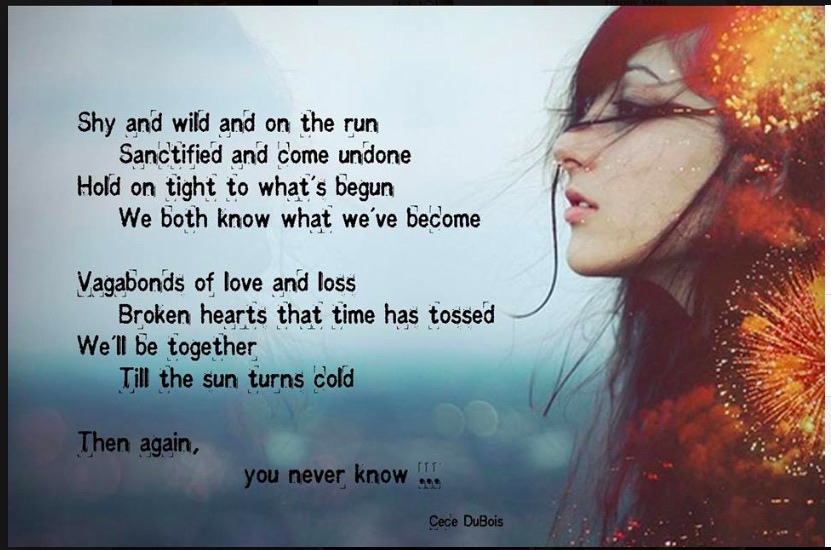


In high school I was told to choose. And each of the tellers told me to chose the thing that was theirs:
Sister Mary Judith said to choose writing
Sister Mary Thomas said to choose music
Sister Mary Dominica said to choose fine art
Sister Josephine said to choose fashion design
You MUST choose this one, each said. This is your gift, each said.
I said no. Was it the best answer? I guess I’ll never know, but I knew in my gut it’s the only answer I could give.
I saw each as one of my children. How do I choose one, and leave the others, orphaned?
How do I nurture one, and leave the others fallow? It was the craziest idea I’d ever heard. But I was just a kid, what did I know? These were brides of Christ telling me to do this. But I couldn’t.
First of all, as I now know, what the creative well is filled with is beyond my control. It is a central space whose energy flows through me. I cannot dictate to the well how it is to express itself. I can only say “yes” to whatever shows up.
I am not the boss of it. I am the steward; the guardian. It is up to me to facilitate, not to dictate.
In my adult life, there are creative threads that have expanded; writing grew to — not only prose or poetry, but a career in songwriting. Design grew to — not just fashion design — but a career in interior design. Music grew to a career as a vocalist. I guess you could say my ‘children’ had ‘children’ of their own.
I sometimes wonder if this is just me, not wanting to “settle down” with something that could organize my life in a way that some would call “adult.” But when that thought comes to mind, the counter argument is always there to ask me, which of your creative ‘children’ would you have abandoned in favor of others?
The answer is, I cannot choose. I have not chosen. They choose me. Even now, in my dotage, I do not regret saying “YES” to all of them.
#SorryNotSorry


Blue Velvet, Blue on Blue, Blue Horizon. Blue is the color of my true love’s eyes. Am I Blue; blue bloods, blue stones, blue sky, blue sea.
I dream of the seashore, with its blue lapping waves. The Caribbean shore is my birthstone, aquamarine blue. Tanzanite is lavender blue, dilly dilly, deep and true. Blue satin ribbons, tying up my hair. Take them loose and let it fall.
The blues rock me and roll me, clear to my soul. Muddy Waters, Bessie Smith, Blind Lemon Jefferson, Skip James, they run blue in my veins, sing my truth from sea to shining sea.
Blue eyes cryin’ in the Rain. Blue Monday; call it Stormy Monday, but Tuesday’s just as bad.
Baby’s blue lips in the wintertime, get her inside, swaddled in the blue blanket.
Blue is the feeling when the loss is real.
Blue is the laminin cross, in every cell. Blue is the glue, holding us all together.
Holding us together.
Holding each.
Holding all.
We are held and connected by the blue.
We are blue.

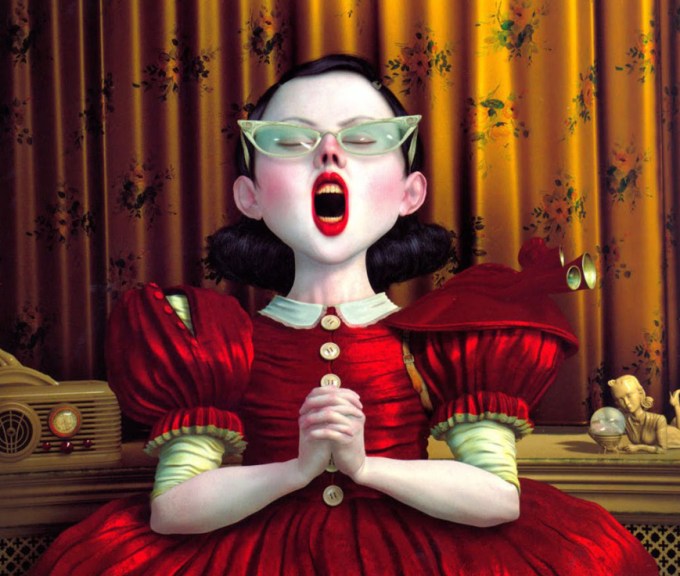
I am a vocal coach. I just read that sentence, and it sounds a little strange to me. Coach vocal. Voice. Coach voice. The definitions of “coach” are all over the place, from a “four wheeled, horse drawn carriage,” to coach as: “developing a person’s skills and knowledge so that their job performance improves, hopefully leading to the achievement of organizational objectives.”
Voice is defined as: “the sound or sounds uttered through the mouth of living creatures, especially of human beings in speaking, shouting, singing, etc.”
I’m sure Miriam or Webster or whoever it was that determined those definitions … I’m sure they were a sharp couple of guys. I mean, they know the definitions of EVERYthing, and actually put it in a book called a dictionary. But neither one of these guys has shown up to observe what happens when an individual is standing in front of me, aching to sing, but scared shitless to do it.
“I need you to sing something.”
“You mean, NOW?”
“Yes. Now. You can sing the alphabet, you can sing Happy Birthday, I really don’t care. I just need to hear your voice.”
And so it begins. Without exception, every . one . can . sing. I didn’t say everyone is a singing star, but singing is as natural a part of us as breathing. Yet so many tend to be paralyzed at the thought of letting their sound out for the world – or, for that matter, themselves – to hear.
Singing, “being of music,” is natural for us all; we speak the language of angels. So the fear is of speaking in the angel tongue. There resides in many a sense of unworthiness (untrue), of not measuring up (the big lie), born of a lifetime of people telling them they can’t do it well enough, and to stop (defamatorily inaccurate) . So I guess, woven into this work I do, is the psychology of gently leading people back to their own truth, and creating a space where they – when they’re ready – will step into it.
The body is a reed instrument. As with any reed instrument, playing it requires breath.
I tell every student that at the moment they popped out of their mama, with that first breath they gulped in Spirit; they have been doing it every moment ever since. Ironically, when they first start working with me, people often find it difficult to breathe. They become “breathless.” So we work on the process of permissions … to breathe (doing it already), to have a voice (has always been there), to raise that voice, to speak in tongue … angel tongue … the native language of the universe.
I just think Miriam and, for that matter, Webster, should sit in on a couple of my students’ sessions. I think they’d be surprised. Maybe they’d even sing.


[VERSE 1]
This road it’s
My ticket
To ride the dream
But in the in between
The blacktop seems to go forever
[VERSE 2]
The days come
The days go
But it’s the nights I live for
Sometimes there’s a
Someone there
Who makes it even better
[CHANNEL]
Now the band’s kickin’ off
I’m walkin’ on
Crowd’s goin crazy
We’re killin’ this song
[CHORUS]
Ooooh
There’s a girl in the second row
She’s holdin’ a big old sign
Says I heart you
Baby don’t you know that I heart you too
Cause I know Oooooh
I couldn’t do what I do without you
This song is a shout out to
The girl in the second row
[VERSE 3]
I’m playing
She’s swaying
She’s on her feet
She’s dancing reaching out her hands
And I can almost touch her
Then some nights
Like this night
The whole room disappears
And we’re alone and singing only to each other
[CHANNEL]
I know it’s a gift
Moments like this
They keep me lovin’ this life I live
[CHORUS]
[BRIDGE]
I know it’s a gift
Moments like this
They keep me lovin’ this life that I live
[CHORUS]
[TAG]
This song is an I love you to
The girl in the second row


 Cece Writes